
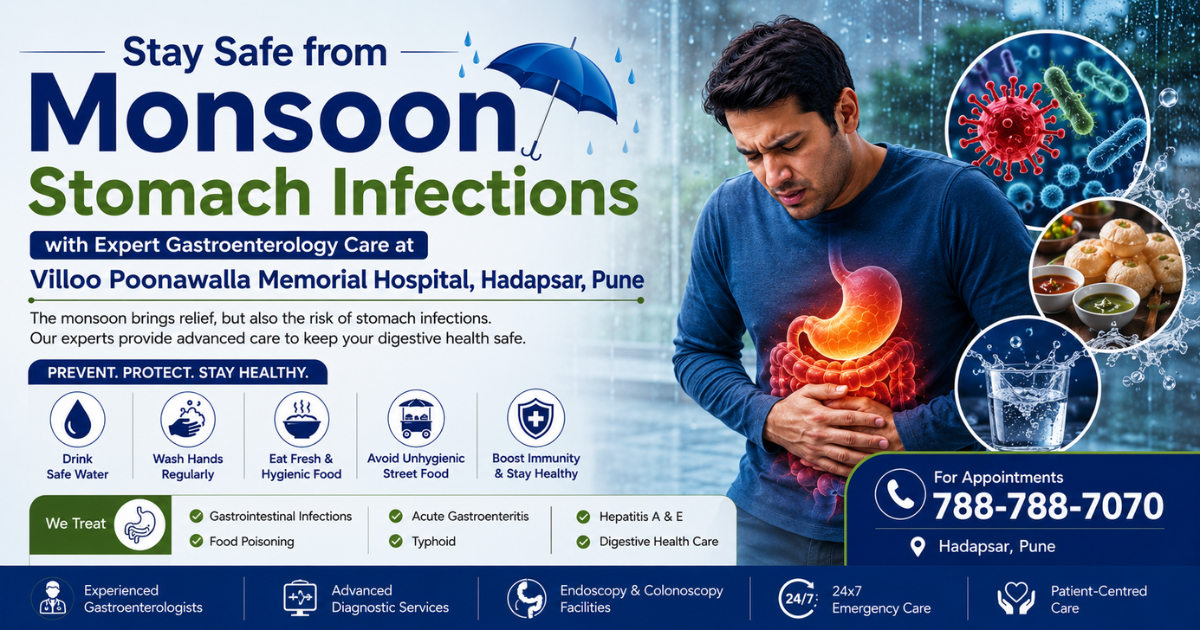
Stay Safe from Monsoon Stomach Infections with Expert Gastroenterology Care at Villoo Poonawalla Memorial Hospital
The monsoon season brings welcome relief from the summer heat, but it also increases the risk of gastrointestinal infections, foodborne illnesses, and waterborne diseases. During this time, contaminated food and unsafe drinking water can lead to infections affecting the stomach and intestines. At Villoo Poonawalla Memorial Hospital, Hadapsar, Pune, our Gastroenterology Department provides comprehensive diagnosis and treatment for monsoon stomach infections, helping patients recover quickly and prevent complications.
If you are searching for a Gastroenterologist in Hadapsar, Gastro Hospital in Pune, or Stomach Infection Treatment in Pune, our experienced specialists are here to help.
Why Do Gastrointestinal Infections Increase During the Monsoon?
Heavy rainfall and waterlogging create favourable conditions for bacteria, viruses, and parasites to contaminate food and drinking water. Poor food hygiene and improper storage also increase the spread of infections.
Common causes include:
- Contaminated drinking water
- Street food prepared in unhygienic conditions
- Improperly stored food
- Unwashed fruits and vegetables
- Poor hand hygiene
People searching for Gastrointestinal Infection Treatment, Food Poisoning Treatment, or Digestive Health Care in Pune should be especially cautious during the rainy season.
Common Monsoon Gastrointestinal Diseases
Several digestive illnesses become more common during the monsoon, including:
1. Acute Gastroenteritis
Acute gastroenteritis causes inflammation of the stomach and intestines, often due to viral or bacterial infections.
Symptoms include:
- Loose motions
- Vomiting
- Abdominal cramps
- Fever
- Dehydration
Early medical care is important, especially for children, older adults, and people with weakened immunity.
2. Food Poisoning
Food poisoning is one of the most common monsoon illnesses caused by consuming contaminated food.
Common symptoms:
- Nausea
- Vomiting
- Diarrhoea
- Stomach pain
- Fever
Prompt evaluation by a Gastroenterologist in Hadapsar can help prevent dehydration and other complications.
3. Typhoid Fever
Typhoid spreads through contaminated food and water and can cause prolonged fever and digestive symptoms.
Warning signs include:
- Persistent fever
- Abdominal discomfort
- Weakness
- Constipation or diarrhoea
- Loss of appetite
Early diagnosis and treatment are essential to avoid serious complications.
4. Hepatitis A & Hepatitis E
These viral infections are commonly transmitted through contaminated food or water during the monsoon.
Symptoms may include:
- Yellowing of the eyes and skin (jaundice)
- Dark urine
- Fatigue
- Nausea
- Loss of appetite
- Abdominal pain
Consult a gastroenterologist if these symptoms develop.
Warning Signs That Require Immediate Medical Attention
Seek medical care if you experience:
- Severe diarrhoea lasting more than 24 hours
- Persistent vomiting
- Blood in stools
- High fever
- Severe abdominal pain
- Signs of dehydration (dry mouth, dizziness, reduced urination)
- Jaundice
Timely treatment can reduce the risk of complications and speed recovery.
How to Prevent Monsoon Gastrointestinal Infections
Simple precautions can significantly lower your risk of digestive infections:
- Drink boiled or purified water.
- Wash hands thoroughly with soap before eating and after using the toilet.
- Avoid raw or undercooked food.
- Eat freshly prepared meals.
- Wash fruits and vegetables thoroughly.
- Avoid uncovered street food during the rainy season.
- Maintain good kitchen hygiene.
- Store cooked food properly.
Following these habits supports better digestive health throughout the monsoon.
Diagnosis and Treatment
At Villoo Poonawalla Memorial Hospital, our gastroenterology specialists use modern diagnostic facilities to identify the cause of gastrointestinal infections.
Depending on the condition, treatment may include:
- Oral or intravenous fluids
- Electrolyte replacement
- Medications to control symptoms
- Antibiotics when appropriate for bacterial infections
- Nutritional advice
- Hospital admission for severe dehydration or complications
Treatment plans are personalised according to each patient’s condition.
Why Choose Villoo Poonawalla Memorial Hospital, Hadapsar, Pune?
Our Gastroenterology Department offers comprehensive digestive healthcare with experienced specialists and advanced diagnostic facilities.
Our strengths include:
- Experienced Gastroenterologists
- Advanced Diagnostic Services
- Endoscopy and Colonoscopy Facilities
- 24×7 Emergency Care
- Personalised Treatment Plans
- Comprehensive Digestive Disease Management
- Patient-Centred Care
Whether you need treatment for Gastrointestinal Infections, Food Poisoning, Acute Gastroenteritis, or other digestive disorders, our team is committed to delivering high-quality care.
Frequently Asked Questions
Is diarrhoea during the monsoon always caused by food poisoning?
No. Diarrhoea can result from viral, bacterial, or parasitic infections, as well as other digestive conditions. A medical evaluation helps determine the exact cause.
Can I treat gastroenteritis at home?
Mild cases may improve with adequate hydration and rest, but persistent symptoms, fever, severe pain, or dehydration require medical attention.
How can I reduce my risk of monsoon stomach infections?
Drink safe water, practise good hand hygiene, avoid unhygienic food, and seek early medical advice if symptoms develop.